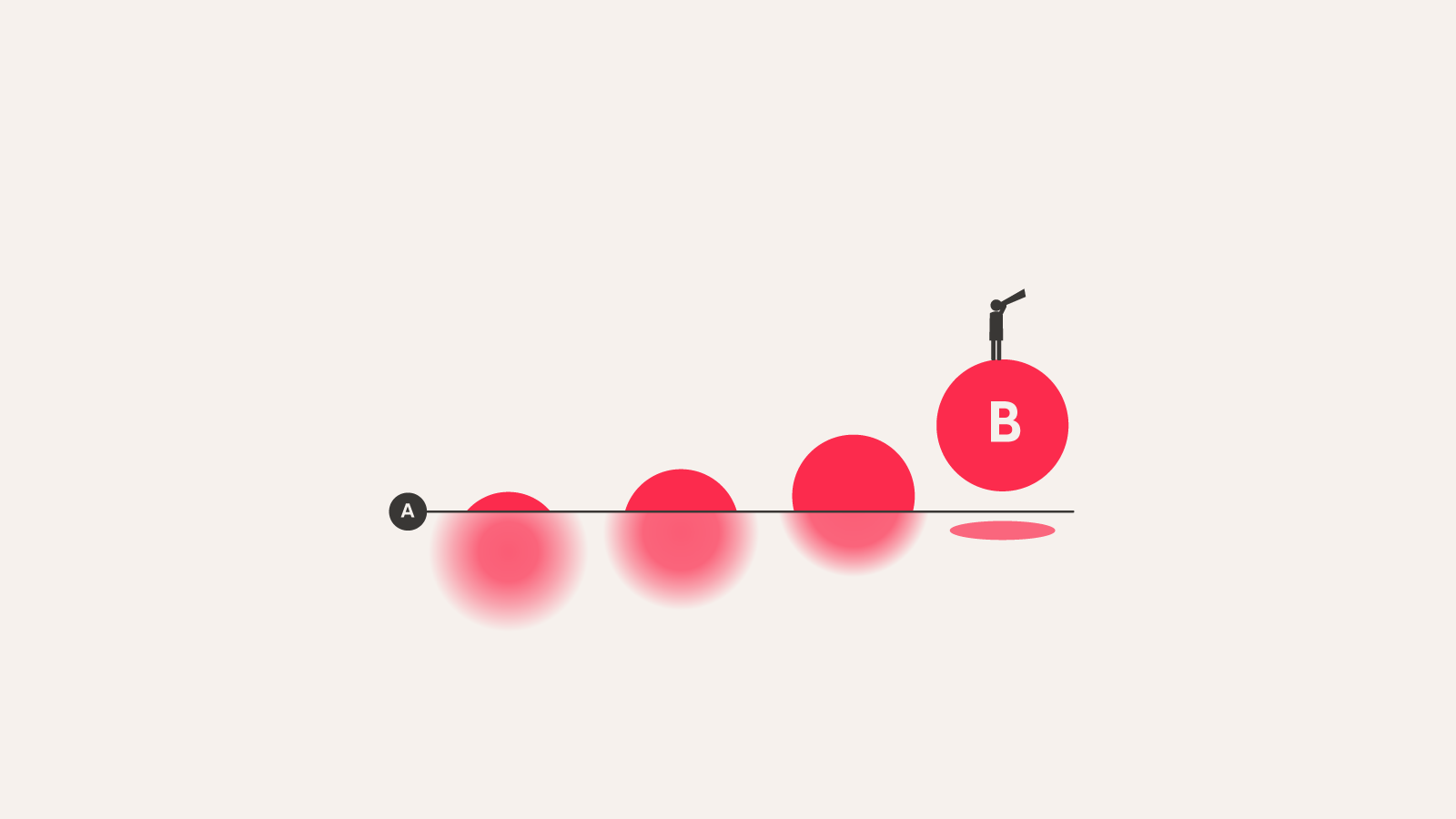
8 signs that show where your brand is losing profit – and your time
Would you set off on a long journey without GPS if you were driving the route for the first time?
Probably not.
Especially if you don’t know the way, can’t see what’s waiting around the next bend, and your family is in the car with you, counting on a safe journey and a happy arrival.
GPS helps you choose the right direction, respond to changes along the way in good time and, above all, know where you’re actually headed. You don’t have to keep guessing whether the next turn is the right one or whether you’ve just taken a wrong one.
What about your brand? Does it have its own GPS?
As a brand owner, you’ve probably developed a very good feel for what works. You know your customers. You know what they’ve bought, what drew them in and what put them off. Many decisions you now make almost automatically.
Some of the decisions you made on instinct probably turned out to be right. Others may have cost you and your team far more time, energy or money than you expected. That’s a normal part of building a brand.
But as your brand grows, there comes a moment when instinct alone is no longer enough. Even with all your experience, you find yourself at a new crossroads, asking:
“How should we respond to a competitor’s new offer?”
“Should we follow the latest trend on social media?”
“How do we stand out at a time when AI can create content?”
“Which opportunities deserve our attention, and which ones are only pulling us away from our goals?”
“How do we keep the customers who already trust us while also winning new ones?”
Each of these decisions can mean a new turn on your brand’s journey.
And without a clear way of making them, it’s easy to spend a great deal of time and money on roads that don’t actually bring us any closer to where we want to be. This is exactly where a brand strategy – your Brand GPS – can help.
What is a Brand GPS – a brand strategy – really for?
A brand strategy is a decision-making system. It helps you understand where you’re going, why you’re going there, and how your brand should act, speak and look along the way.
Before a GPS can do its job, you first need to set a destination and the steps to get there. For a brand, that means a clearly defined vision and business goals – in other words, the direction in which you want your brand to grow in the long term. Once that’s clear, everyday decisions become easier, too.
It also becomes easier to spot communication that doesn’t represent your brand in the right way and, most importantly, to protect the very things that made customers trust your brand in the first place.
Perhaps when you founded your company, you mapped out your business goals very carefully but didn’t have the time or budget to develop your brand – the part that gives customers a reason to connect with what you offer and choose you. The reason they look past your competitors and straight at you.
When is it time to revisit your Brand GPS?
If you feel that you and your team often find yourselves guessing when it comes to brand decisions, jumping from one trend to the next, mostly reacting to competitors, or that your communication no longer reflects what your brand has become, it may be time to take a fresh look at your brand strategy.
Below, we’ve gathered 8 signs that your Brand GPS may not be leading you in the right direction – and that your brand could benefit from a clear strategy for growth.
Not because the road you’ve taken so far was wrong – quite the opposite. It’s because along the way you’ve gained enough experience to lead your brand more intentionally today.
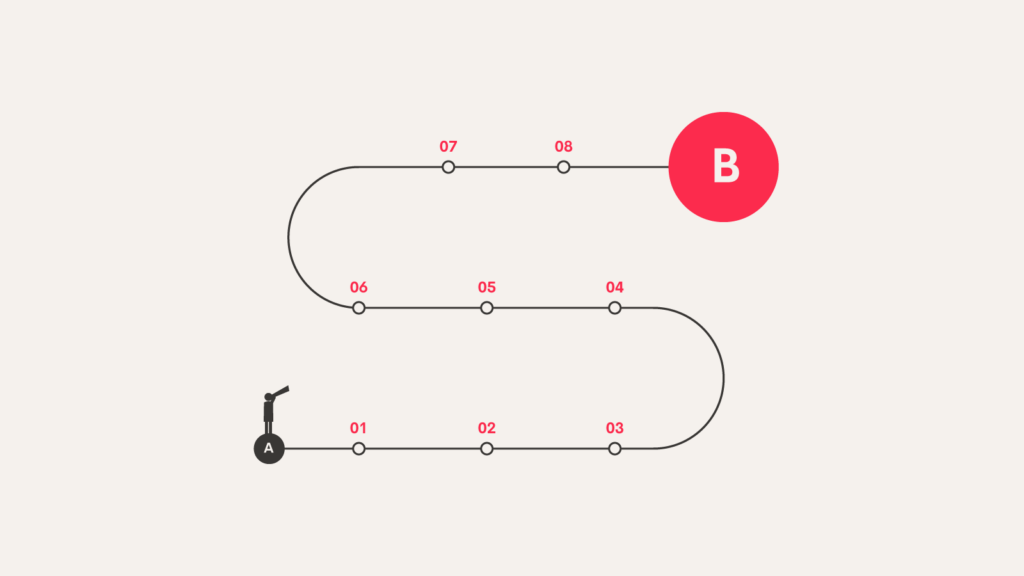
8 signs your brand strategy needs a refresh
1. When your brand no longer reflects your vision and values
When you started out, you were probably focused mainly on keeping the business alive and helping it grow. Today, you know much more about the kind of business you want to build. Perhaps you once wanted to be “the biggest,” and now quality matters more to you. Perhaps you once wanted to offer as much as possible, and now you know you want to lead a brand that’s known for one thing. Perhaps you once communicated quite formally, and today your relationship with clients is far more personal and relaxed. You’ve moved on.
So it can feel a little strange when you look at your company website or social media and think: “This is still me … but it’s not quite what I stand for anymore.” Your experience, ambitions and outlook on business may be very different today than they were five or ten years ago.
Your brand should reflect the direction you’re taking your business. If your vision has changed or deepened in the meantime while your brand has stayed stuck in the past, it may be time to reset your Brand GPS.
2. When your marketing messages and campaigns get no response
You and your team have put together a truly creative campaign. The photos are beautiful, the video is professional, the copy is well written and the ad is set up correctly. You hit publish. And … nothing. A few likes, a few clicks and far too few inquiries – from the wrong kind of client. So next time, you do even more. A better video. More posts. More ads.
But if you haven’t asked yourself what’s going on in your customer’s mind right now, you may simply end up saying something louder that nobody needs to hear.
Perhaps you’re talking about your product’s features while your customer is thinking about the problem it solves. Perhaps you’re talking about yourself while they’re looking for an answer to one question: “Why is this for me?”
For your brand to succeed and last, it’s essential to understand the lives of the people you want to reach. If customers no longer respond to your messages and campaigns the way they used to, it doesn’t necessarily mean you just need to “do more marketing.”
You may first need to check whether you’re still talking about the right things to the right people.
3. When customers see us differently than we’d like
Perhaps you want customers to see your brand as premium, but they see it as an expensive alternative? You want to create a sense of warmth and a personal connection, but your brand’s communication comes across as cold and corporate? Or you and your team are convinced that people choose you for your quality, when in reality they were drawn in by speed, convenience or price.
What a brand intends is one thing. What the customer experiences and perceives is another. And if we don’t check the gap between the two, we can spend years investing in an image that looks quite different in our heads than it does in the market.
4. When your brand starts looking to competitors instead of its customers
Keeping an eye on competitors, trends and the wider market is part of running a good business. It helps you understand what’s changing, what customers expect and where new opportunities are appearing. The trouble starts when there’s so much information that you change direction every time something new appears. A competitor launches a new service, and you start wondering whether your brand needs one too.
A new content format becomes popular, and you ask yourself whether you should be there as well. Someone changes their offer, visual identity or tone of voice, and suddenly you’re rethinking your own brand’s offer.
None of this is wrong in itself. The question is whether these decisions come from your strategy or simply from whatever is happening around you right now. Your Brand GPS helps you tell the difference between opportunities that truly make sense for your brand and those that only create the feeling that you have to do something.
5. When your brand elements don’t work together and fail to build trust
Imagine someone who is stylishly and tastefully dressed, yet clearly neglects their skin and hair. They talk about the value and benefits of reading, yet never pick up a book and spend hours on their phone instead. They’re passionate about running, but after every training session you find them with unhealthy fast food in hand. On top of that, you’ve caught them in a lie more than once. You’d probably wonder how much you can really trust them.
It’s similar with brands. When we notice strong contradictions that don’t fit together, trust can start to fade quickly.
And when people don’t trust a brand, they’re less willing to give it their time and money, too.
Your brand is most likely nowhere near that inconsistent, but in our work we often see that we all have our own “blind spots.” Sometimes we don’t even notice that our visual identity, communication, offer and customer experience are creating different impressions.
A brand strategy helps you look at all these elements as a whole and check whether they’re all telling the same story.
6. When your brand has reached its goals and is now standing still
Goals set the direction for your brand’s growth, so they’re essential – just as a GPS and a set destination are essential for a long road trip. But with a brand, it isn’t enough to set goals only at the beginning. It’s wise to have a system for setting, reviewing and refreshing your goals, because as they change, so does the direction you need to take your brand.
When you started, the goal was clear: reach your first 100 customers, fill your calendar, open a physical location or hit a certain annual revenue. And you did it. The problem arises when you don’t set the next goal. You keep doing what used to work, because you know it works. You still post, send newsletters, run campaigns and develop your offer, but it has all started to feel more like maintenance than planned progress.
The brand is working. You’re working. But the results have stopped moving. If your brand has reached the goals you once set for it, it’s a perfectly fair question to ask: “What’s the next goal?” Without one, a brand can start to stagnate, and you may find yourself caught in a cycle of decisions that take a lot of work but no longer bring real progress.
7. When your brand isn’t building strong enough relationships with customers and finds it harder to win new ones
Picture a café that guests love coming back to, recommend to their friends and bring new faces along to. A café like that doesn’t just build a base of happy guests, but also recognition and trust within a wider circle of people. But what happens when guests stop coming back, or when recommendations no longer bring in as many new visitors? Perhaps their needs are changing, perhaps the offer is no longer as relevant to them, or perhaps the brand can no longer clearly show what makes it special.
The same is true for every brand. Keeping existing customers loyal and attracting new ones go hand in hand: happy customers can become a brand’s best ambassadors, but new customers also need to recognize the value the brand offers them.
If you notice that customers come back less often, that there are fewer recommendations, or that winning new customers takes more and more marketing effort, it’s worth checking whether your brand still meets your customers’ needs and communicates its value clearly enough.
The key question is: Do the people who already know you still see a reason to stay with you – and do those who don’t know you yet clearly understand what you offer, why it matters to them and why they should choose you?
8. When you want to reach a new group of customers
Imagine a restaurant that has spent years building its reputation among guests looking for a calm setting, a classic menu and a personal touch. Now it also wants to attract younger guests who are looking for a different experience. The owner decides to start following new trends on social media, change a few photos and add a few dishes to the menu. But will that be enough?
If the restaurant wants to reach a new group of guests, it first needs to understand what these people are looking for, what matters to them and how their needs differ from those of its existing guests. At the same time, it needs to know what it wants to keep – because that may be exactly why its loyal guests keep coming back.
The same applies to brands that want to broaden their audience, enter a new market or focus on a different customer segment.
Simply adding a new group of people to your marketing plan doesn’t mean you’ll know how to truly speak to them. You may need to adapt your messages, offer, communication channels or the way you present your value – while keeping a clear enough common foundation so that your brand doesn’t lose its identity.
Broadening your audience isn’t just a marketing decision. It’s a decision about how your brand grows. So before taking that step, it’s worth asking: Is this new audience really right for us? What can we offer them? What needs to stay the same, and what will need to change? Your Brand GPS helps you assess whether the new direction supports your brand’s long-term goals and how to prepare for it without losing what makes you recognizable.
Wondering whether your brand needs a new Brand GPS?
If you and your team recognized yourselves in more than one of these signs, it doesn’t mean something is wrong with your brand. It may simply mean that your brand has outgrown the strategy that guided it at the start. And that’s actually good news.
Over the years, you’ve built your brand, tested ideas, watched how customers respond, made decisions and learned along the way. You’ve probably done plenty by instinct and paid for some of those lessons with time, energy or money. Thanks to everything you’ve learned, you now have a much stronger starting point for the next stage.
Your brand has most likely changed in the meantime. So have your goals, your offer, your customers, the market, your competitors – and you. That’s why a strategy that was right a few years ago may no longer give you clear answers today.
At BeSpotted Brand Studio, we work with you to map out your goals again and set up your Brand GPS. We take the road you’ve traveled so far, your experience and everything you’ve built over the years as the starting point for the next stage of your brand.
Because a good strategy isn’t a document that ends up in a drawer – it’s your system for making decisions.
It helps you know when to turn, what to say no to, which opportunities are truly right for your brand and, above all, how to build a brand that gives your customers plenty of reasons to stay with you.
Wondering whether your brand needs a new Brand GPS?
Book a free consultation with us. Let’s talk about where your brand is today, where you’d like to take it, and whether it’s time to map out the road ahead together.

